Specialists are paid mostly on a fee-for-service basis, although there is variation across provinces. For example, in Quebec, alternative payment structures comprised about 15 percent of total payments to experts in 20162017, as compared to 22 percent in British Columbia and 33 percent in Saskatchewan. follow this link Clients can select to go directly to a specialist, but it is more common for GPs to refer patients to specialty care.
Most of physicians and experts expense P/T federal governments directly, although some are paid a wage by a hospital or facility. Patients may be needed to pay out-of-pocket for services that are not covered by public insurance coverage strategies. After-hours care is typically supplied in physician-led walk-in centers and hospital emergency clinic.
Historically, GPs have not been required to provide after-hours care, although more recent group-practice arrangements specify requirements or monetary incentives for offering after-hours care to signed up clients. 21 In 2015, 48 percent of GPs in Canada (67% in Ontario) reported having arrangements for patients to see a physician or nurse after hours.
The Only Guide for What Is A Health Care Premium
They are frequently managed by entrusted health authorities or health center boards representing the community. In many provinces and areas, many health centers are publicly owned,24 whereas in Ontario they are predominantly personal not-for-profit corporations. 25 There are no particular data on the variety of personal for-profit centers (primarily diagnostic and surgical).
26 Medical facilities in Canada usually run under yearly worldwide budgets, negotiated with the provincial ministry of health or handed over health authority. Nevertheless, several provinces, consisting of Ontario, Alberta, and British Columbia, have thought about presenting activity-based funding for hospitals, paying a repaired amount for some services provided to patients. 27 Hospital-based doctors typically are not health center staff members and are paid fee-for-service directly by the provincial ministries of health.
Hospital-based mental healthcare is supplied in specialty psychiatric hospitals and in basic healthcare facilities with psychological health beds. The P/T governments all provide a variety of community psychological health and addiction services, consisting of case management, assistance for households and caretakers, community-based crisis services, and supportive housing. 28 Private psychologists are paid out-of-pocket or through private insurance.
The 20-Second Trick For The Health Care Sector Constituted What Percentage Of The U.s. Gross Domestic Product In 2014?

Mental health has actually not been formally incorporated into medical care. However, some companies and provinces have launched efforts to collaborate or collocate mental health services with medical care. For instance, in Ontario, an intersectoral psychological health method has been in place given that 2011 and was expanded in 2014 to much better integrate mental health and medical care.
All P/T governments fund such services through basic tax, but protection varies throughout jurisdictions. All provinces provide some domestic care and some combination of case management and nursing look after home care clients, but there is substantial variation when it concerns other services, consisting of medical equipment, supplies, and home assistance.
Eligibility for house and property long-term care services is normally figured out through a needs evaluation based on health status and functional impairment. Some jurisdictions likewise consist of means-testing. About half of P/T federal governments offer some home care without means-testing, but gain access to may depend both on examined priority and on the schedule of services within capped spending plans.
The 6-Second Trick For What Would Single Payer Health Care Cost
In addition, financial supplements based on capability to pay can assist support room-and-board costs. Some provinces have developed minimum residency periods as an eligibility condition for center admission. Investing on nonhospital institutions, the majority of which are residential long-term care centers, was approximated to account for simply over 11 percent of overall health expenditures in 2017, with financing primarily from public sources (70%).
Public funding of home care is provided either through P/T federal government contracts with agencies that provide services or through federal government stipends to patients to buy their own services. For instance, British Columbia's Assistance for Independent Living program enables customers to acquire their own home-support services. 32 Provinces and areas are accountable for providing palliative and end-of-life care in health centers (covered under Canadian Medicare), where the majority of such expenses happen.
In June 2016, the federal government introduced legislation that amended the criminal code to enable qualified grownups to demand medical assistance in passing away from a doctor or nurse professional. Because that time, P/T governments and medical associations have actually established procedures and regulative structures to permit for medical assistance in craving people facing terminal or irreparable diseases.
All about Which Of The Following Is Not A Problem With The Current Health Care System In The United States?
33 Mental Health Delray Assistance for informal caregivers (approximated to supply 66% to 84% of care to the senior) differs by province and area. 34 For example, Nova Scotia's Caretaker Benefit Program provides qualified caretakers and care receivers CAD 400 (USD 317) monthly. 35 There are likewise some federal programs, consisting of the Canada Caretaker Credit and the Work Insurance Coverage Compassionate Care Benefit.
Protection for prescription drugs has become a controversial problem in Canadian healthcare arguments. (I Viewfinder/ Shutterstock) Subscribe now for as low as $2 a month! Subscribe now for as low as $2 a month! Subscribe now for just $2 a month! The Nation is reader supported: Chip in $10 or more to assist us continue to discuss the issues that matter. what is single payer health care?.
Did you know you can support The Country by drinking red wine? Rowan Burdge was identified with type 1 diabetes simply over a decade back, when she was 21 years of ages. Given that then, she estimates that she's spent over $100,000 on prescriptions, co-pay, deductibles, and premiums to handle a complicated, chronic disease.
The Facts About How Much Is Health Care Per Month Revealed
However Burdge doesn't reside in the United States. She resides in Canada. And while 2 of the 5 insurance coverage plans she's enrolled in are publicBritish Columbia's medicare program and the province's supplemental drug planthe monetary hoops she has needed to jump through just to "remain alive," as she puts it, would be right in the house in a story about a country without single-payer health care.
That does not erase the reality that the Canadian system still fails: Canada is the only country on the planet that has a national, universal medical insurance coverage Click here to find out more program, but no equivalent drug strategy, otherwise known as pharmacare. Canada's technique to drug coverage looks less like a unified system than a patchwork, with over 100 various government-run drug plans and 100,000 private strategies across the country.
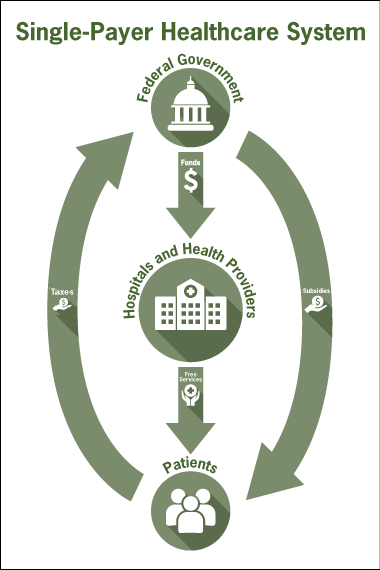
One in 5 people living in Canada have either insufficient protection for their health needs, or no protection at all. Households with protection still pay an average of CAD 1,000 each year (about $755) in out-of-pocket costs, including premiums and prescription co-pays, and distinctions across the numerous public drug strategies run by each Canadian province and area suggest that the cost someone pays for a drug in one location might be a lot more than they 'd pay in another.
Fascination About A Health Care Professional Is Caring For A Patient Who Is About To Begin Receiving Acyclovir
However the costs build up quick for somebody with a persistent condition; Burdge approximates that she spends between CAD 800 and 1,200 (about $600 to $900) on health needs on a monthly basis. A report from the Canadian Federation of Nurses Unions found that monetary barriers to prescription medication cause hundreds of sudden deaths each year in people aged 55 to 64, to state absolutely nothing of other age.